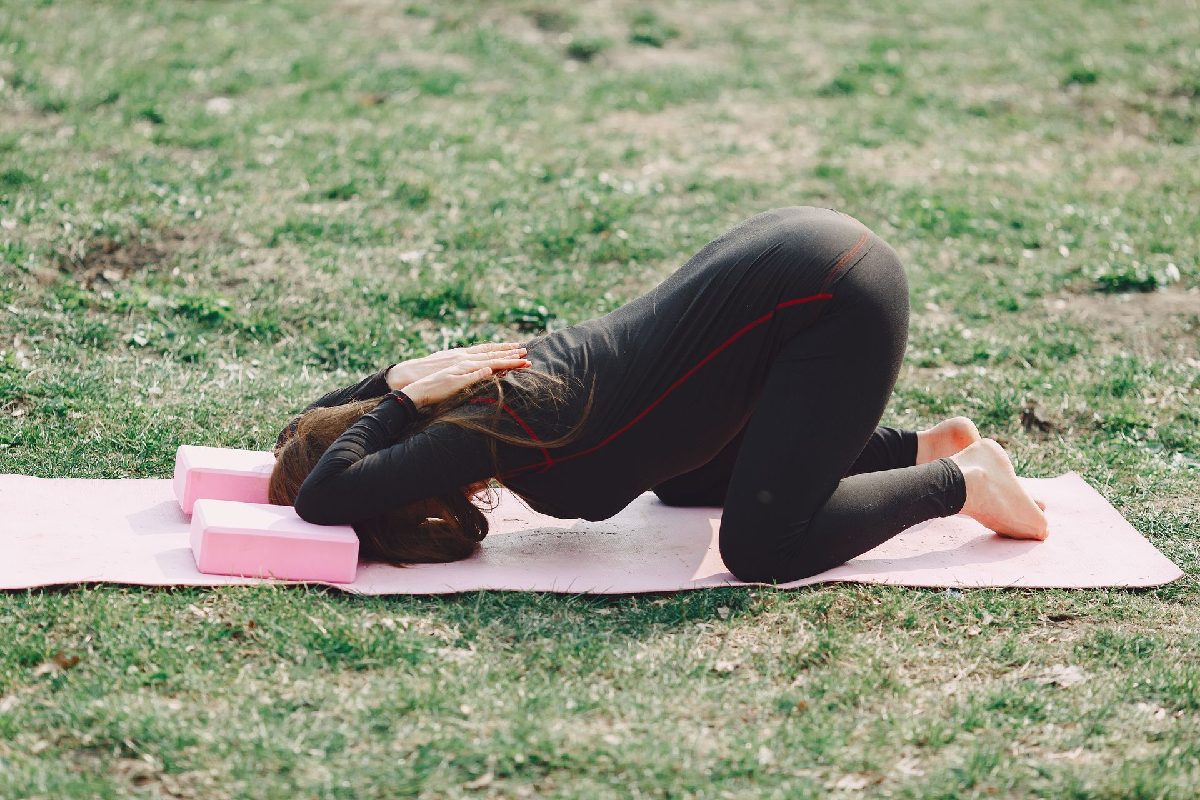
Restorative Yoga asks for almost no physical effort at all. Where most styles build strength or flexibility through active engagement, Restorative Yoga uses props to fully support the body in a small number of poses, allowing the muscles to release completely rather than work.
Restorative Yoga grew out of B.K.S. Iyengar's use of props to help students recover from illness or injury without straining the body, and was further developed and popularised in the West by Judith Lasater, an early student of Iyengar, starting in the 1970s. Lasater's approach uses generous prop support, blankets, bolsters and blocks, to remove muscular effort from a pose almost entirely, so the body can rest into a position of comfort rather than hold itself there.
Khushboo Chatterjee, who teaches Restorative Yoga alongside Hatha and Vinyasa in Bengaluru, offers it as part of a broader practice that blends active and passive elements, which reflects how Restorative is often taught as a complement to more physically demanding styles rather than a standalone practice for every session.
A typical class involves very few poses, often four to six across a full session, each held for an extended period, sometimes 10 to 20 minutes, fully supported by props so that no muscular effort is required to maintain the shape. The intention is to activate the parasympathetic nervous system, the body's rest and recovery response, rather than to build strength or flexibility.
Restorative Yoga suits people dealing with high stress, poor sleep, or general burnout, and also suits anyone recovering from illness, injury, or simply needing a genuinely restful counterbalance to a demanding week or an intense physical practice elsewhere. It is accessible to nearly everyone regardless of fitness level, since the practice asks for stillness and receptivity rather than physical capability.
A common misunderstanding is that Restorative Yoga is the same as a slow Yin class. The two share a slow, still quality, but Restorative uses heavier prop support specifically to remove effort entirely, while Yin still asks the body to hold some gentle stretch, targeting connective tissue rather than pure rest.
Another misconception is that Restorative Yoga is not a "real" workout and therefore not worth doing. The nervous system benefits, better sleep, reduced stress, improved recovery, are genuine and well documented, even without the physical exertion of a more active style.
Expect a lot of props, a slow pace, and long, still holds. It is common to feel restless or even slightly uncomfortable in the stillness during your first few sessions, particularly if you are used to more active styles, and this generally eases with a bit of practice.
Since much of the practice depends on correct prop placement and setup, it is worth confirming a teacher has specific training in Restorative Yoga, not just general experience with yoga props.