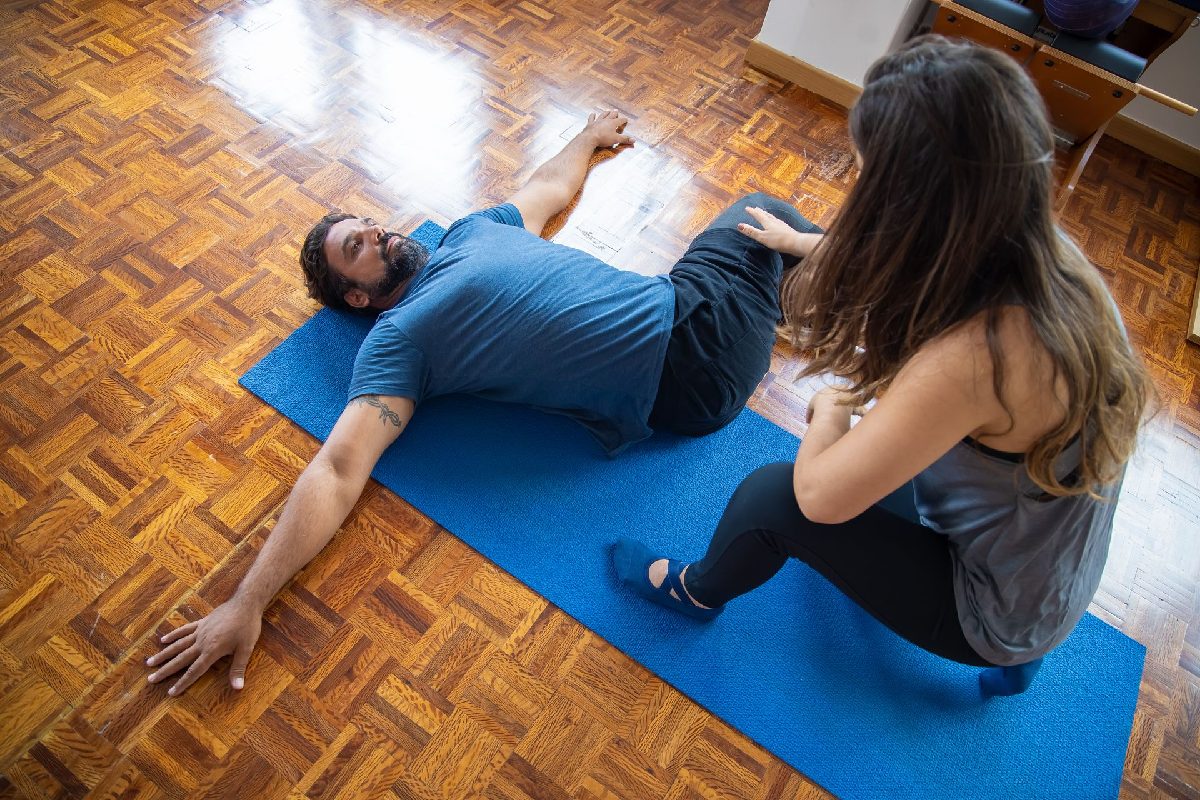
Kundalini Yoga looks and feels distinctly different from most other styles taught in India today. Rather than a sequence built primarily around physical postures, it combines movement, specific breathing techniques, chanted mantra, and meditation into a single structured class format.
The concept of kundalini energy, described in yogic tradition as a dormant energy located at the base of the spine, appears in ancient Indian texts including the Upanishads. As a specific, publicly taught class format, Kundalini Yoga was introduced to the West in the late 1960s by Yogi Bhajan, who structured the practice into a repeatable format combining warm up, a set sequence of exercises called a kriya, relaxation, and meditation.
A typical class follows a fairly consistent structure: an opening tuning in period, a warm up, a kriya, which is a specific set sequence of postures, movements, and breathing techniques performed in a defined order, a relaxation period, and a closing meditation. Chanting or mantra is often woven throughout, which is a distinctive feature compared to most other styles.
Kundalini Yoga suits people looking for a practice that combines physical movement with breath, sound, and meditation in one structured session, rather than a purely physical or purely meditative class. It tends to appeal to practitioners interested in the more energetic or spiritual dimensions of yoga, alongside the physical benefits.
Because kriyas are set sequences rather than an open flow, it also suits people who appreciate structure and repetition, similar to how Ashtanga's fixed sequence appeals to certain practitioners for the same reason.
A common misunderstanding is that Kundalini Yoga is simply a more intense or advanced style. It is better understood as a different format entirely, structured around specific kriyas rather than difficulty level, and a kriya can be gentle or demanding depending on which one is taught.
Another misconception is that the chanting and mantra work is inherently religious in a way that excludes people from other backgrounds. Most teachers frame the sound and breath work as a technique with a specific physiological and mental effect, rather than requiring any particular belief system to participate.
Expect a format that includes more than physical postures alone, with breathwork, sound, and meditation genuinely integrated rather than added at the end. A good teacher will explain what to expect from the specific kriya being taught that day, since the content changes from class to class more than in some other styles.
Since the practice is quite distinct from general Hatha or Vinyasa training, it is worth confirming a teacher has specific Kundalini training rather than assuming general yoga certification covers it.